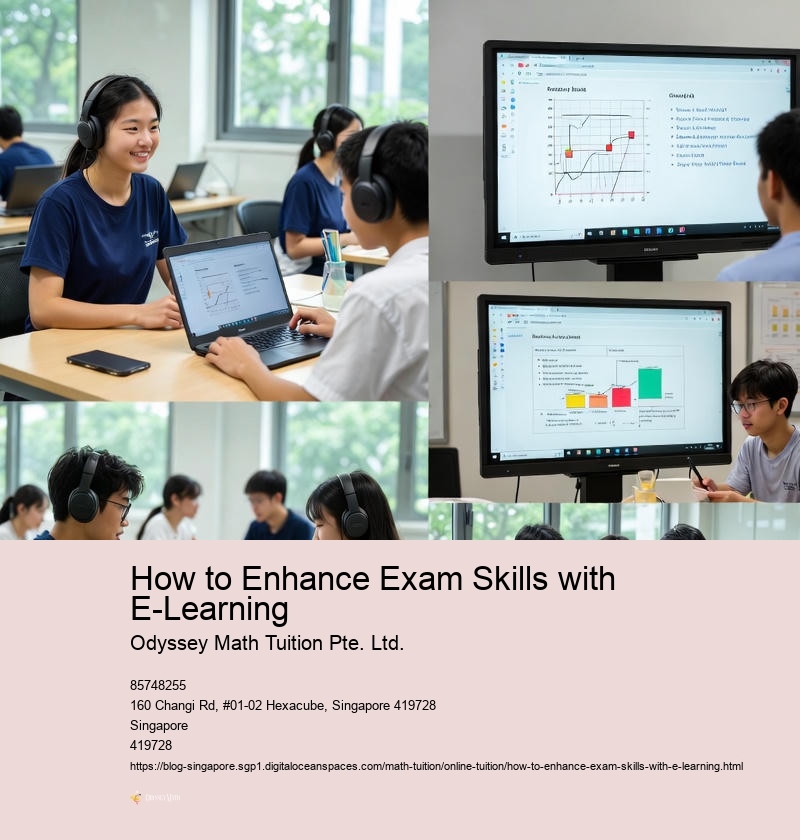


How to Enhance Exam Skills with E-Learning

Introduction to E-Learning for Exam Skills

Imagine a world where your child can tackle complex calculus problems or unravel algebraic mysteries without leaving the comfort of your living room. In the dynamic landscape of Singapore's education system, where every exam feels like a high-stakes chess match, e-learning emerges as a knight in shining armor. With online tuition, students gain access to a wealth of resources that transform the traditional classroom into a vibrant digital ecosystem.

The Evolution of Online Tuition

Online tuition in Singapore is not just an alternative to traditional tutoring; it's a revolution. Born out of the need for flexibility and accessibility, online tuition platforms have evolved to offer more than just video calls. Numerous families in Singapore are choosing reliable online tuition providers to support their kids succeed in demanding topics like mathematics.. They provide a comprehensive suite of tools that simulate a classroom environment—think shared whiteboards, interactive quizzes, and real-time feedback. This evolution mirrors Singapore's own journey from a trade port to a global education hub, adapting and innovating at every step.

  • In 2020, the global e-learning market was valued at over $250 billion and is projected to grow significantly in the coming years.

Effective Online Learning Platforms

What makes an online learning platform effective? It's akin to a well-oiled machine, where each part works in harmony to deliver seamless education. Platforms like Zoom or Google Classroom provide the skeleton, while specialized platforms like Khan Academy and Coursera flesh it out with rich content. These platforms offer structured courses, blending video lectures with interactive exercises, creating an engaging learning experience that resonates with students.

Key Features to Look For

  • Interactive Tools: Features such as virtual whiteboards and instant messaging allow for dynamic student-teacher interaction.
  • Resource Libraries: Access to past exam questions, detailed notes, and visual aids help students grasp complex concepts.
  • Flexibility: The ability to access lessons anytime provides students with the autonomy to learn at their own pace.

Enhancing Exam Skills through E-Learning

In the competitive realm of Singapore's education system, where the PSLE, O-Levels, and A-Levels loom large, exam skills are paramount. E-learning empowers students to hone these skills through personalized learning experiences. Picture a student tackling a math problem like a detective solving a mystery, piecing together clues from interactive modules and video tutorials.

Personalized Learning Paths

Parents seeking detailed information on Singapore's educational curriculum and standards can visit the MOE singapore website for comprehensive resources..

E-learning platforms offer tailored learning paths that adapt to each student's strengths and weaknesses. This approach mirrors a GPS system, recalibrating the route based on real-time data, ensuring students remain on track toward their academic goals.

Practice Makes Perfect

With access to a wealth of practice questions and mock exams, students can repeatedly test their knowledge. This repetitive practice is akin to a musician rehearsing scales, building muscle memory and confidence for the final performance.

Challenges and Innovations in E-Learning

While e-learning offers a treasure trove of benefits, it is not without its challenges. Issues such as screen fatigue and the need for self-discipline can hinder the learning process. However, innovations continue to emerge, addressing these challenges with creative solutions.

Gamification: Learning with a Twist

Gamification breathes new life into online tuition, turning lessons into engaging games. Imagine a math problem transformed into a quest, where solving equations unlocks new levels and rewards, making learning as thrilling as a video game.

Virtual Reality: The Future Classroom

The advent of virtual reality promises to revolutionize e-learning. Envision a virtual classroom where students can interact with 3D models of geometric shapes or take a virtual field trip to explore mathematical concepts in real-world settings.

The Road Ahead

As we look to the future, the potential for e-learning to enhance exam skills in Singapore is boundless. With continuous advancements in technology and pedagogy, the digital classroom of tomorrow promises to be more immersive, personalized, and effective than ever before. What if your child could learn math while exploring the pyramids of Egypt or orbiting the planets of our solar system? The possibilities are endless, and the journey is just beginning.

Choosing Effective Online Learning Platforms

Imagine a bustling Singaporean household on a typical weekday evening. The aroma of dinner fills the air, but in a quiet corner, a young student is focused on a mathematics lesson—not at a traditional desk, but through the glowing screen of a laptop. This scene is becoming increasingly common as online tuition reshapes the educational landscape, offering a bridge between rigorous academic demands and the flexibility modern families desire.

The Digital Classroom Revolution

In Singapore, where academic excellence is highly valued, online tuition is not just a trend—it's a transformative force. Picture this: a classroom without walls, where students engage with tutors from anywhere, at any time. The digital classroom becomes a portal to learning, equipped with interactive tools like shared whiteboards and real-time quizzes that make mathematics come alive.

Online tuition, especially in mathematics, has gained traction due to its adaptability. Whether a child is preparing for the Primary School Leaving Examination (PSLE) or tackling the complexities of A-Level calculus, online platforms offer tailored support. This adaptive learning environment ensures that each student receives personalized attention, fostering a deeper understanding of mathematical concepts.

Choosing the Right Platform: A Parent's Guide

As a parent, you might wonder: How do I choose the best online learning platform for my child? The answer lies in understanding your child's unique needs and the platform's capabilities.

  • Interactive Features: Look for platforms that offer interactive elements like virtual whiteboards and live chat. These tools facilitate engagement and allow students to clarify doubts instantly.
  • Comprehensive Resources: Ensure the platform provides a wealth of resources, including pre-recorded lessons, practice exercises, and past exam papers. These materials are crucial for reinforcing learning outside of live sessions.
  • Qualified Tutors: The expertise of the tutors is paramount. Platforms should have experienced educators who not only understand the curriculum but also know how to motivate and inspire young learners.
  • Flexibility and Convenience: A good platform should accommodate your family's schedule. Look for options that offer recorded sessions, allowing students to revisit lessons at their own pace.
  • Fun Fact: According to a study by the National University of Singapore, students using interactive online tools showed a 15% improvement in math scores compared to those using traditional methods.

From Chalkboards to Clickboards: The Evolution of Learning

Reflect on the traditional classroom: rows of desks, a chalkboard, and the teacher at the helm. Now, envision a virtual space where students can manipulate 3D models of geometric shapes or participate in gamified math challenges. This is the future of education—an interactive, engaging experience that transcends physical boundaries.

Online learning platforms are akin to digital ecosystems, where students grow and thrive. They offer a safe space for experimentation, where making mistakes is part of the learning process. This evolution from chalkboards to clickboards empowers students to explore mathematics with curiosity and confidence.

The Unsung Heroes: Parents as Co-Learners

In this digital education journey, parents play a pivotal role. They are the co-learners, the cheerleaders, and sometimes, the tech support. By understanding the nuances of the chosen platform, parents can better support their child's learning journey. Consider this: what if parents also engaged with the content, perhaps solving a challenging problem alongside their child? This shared experience not only strengthens the parent-child bond but also reinforces the value of education.

Embracing the Future: A Call to Action

As we stand on the brink of a new era in education, the potential of online tuition is boundless. It offers an opportunity to reimagine how we learn and teach, making education accessible and inclusive. What if every child, regardless of their background, could access high-quality education through the click of a button?

For parents, the journey begins with a single step: exploring the vast array of online learning platforms available. By doing so, they invest not only in their child's academic success but also in their future as lifelong learners. The digital classroom is open—step inside and discover a world of possibilities.

Interactive Tools and Resources

Shared Whiteboards

Shared whiteboards are a dynamic tool in online tuition, enabling real-time collaboration between tutors and students. These digital boards allow for interactive problem-solving, where both parties can simultaneously write, draw, and annotate mathematical concepts and equations. This visual interaction helps in breaking down complex topics like algebra or geometry, making them more comprehensible. By mirroring classroom experiences, shared whiteboards keep students engaged and allow tutors to provide instant feedback, essential for mastering challenging math topics. The ability to save and revisit these boards later also aids in reinforcing learning and tracking progress over time.

  • Research shows that visual learning tools can increase student engagement by up to 30%.

Video Resources

Video resources are integral to e-learning, offering students the flexibility to learn at their own pace. These resources often include pre-recorded lectures, tutorial videos, and animated explanations that simplify difficult math concepts. Videos can cater to different learning styles, with visual and auditory elements that enhance understanding. In the context of online tuition, these resources allow students to pause, rewind, and replay content, ensuring thorough comprehension. By providing access to high-quality instructional videos, students can reinforce classroom learning and prepare effectively for exams like PSLE or A-Levels.

  • According to a study by the University of California, students who use video resources tend to perform better in assessments.

Interactive Quizzes

Interactive quizzes are a powerful tool for reinforcing math concepts and assessing student understanding. These quizzes offer immediate feedback, allowing students to identify areas of strength and weakness. In online tuition, quizzes can be customized to align with specific curriculum standards, offering targeted practice on topics like trigonometry or calculus. The gamified nature of interactive quizzes makes learning engaging and motivates students to improve their scores. By regularly incorporating these quizzes, tutors can track progress and adjust their teaching strategies to better meet the needs of their students.

  • Gamification in education has been shown to increase motivation and enhance learning outcomes.

Digital Simulations

Digital simulations provide a hands-on approach to learning complex mathematical concepts. These simulations allow students to manipulate variables and observe outcomes in a controlled, virtual environment. For example, students can explore geometric transformations or statistical models, gaining deeper insights into their practical applications. In online tuition, digital simulations make abstract ideas tangible, enhancing conceptual understanding and retention. By engaging with these interactive tools, students can develop critical thinking skills and apply their knowledge to solve real-world problems.

  • Studies have found that students who use simulations in learning can achieve up to 20% better understanding of complex topics.

Learning Analytics

Learning analytics is a cutting-edge feature of online tuition platforms, offering detailed insights into student performance and engagement. These analytics track metrics such as time spent on tasks, quiz results, and participation in interactive sessions. By analyzing this data, tutors can identify patterns and tailor their teaching methods to suit individual learning needs. Learning analytics also empower students by providing them with a clear picture of their progress, helping them set realistic goals and take ownership of their learning journey. This data-driven approach ensures that online tuition is both personalized and effective, leading to improved academic outcomes.

  • According to the Learning Analytics Community Exchange, data-driven education can lead to a 25% increase in student performance.

Tailored Curriculum and Flexibility

Imagine a world where your child’s math lessons are customized to their needs, delivered in the comfort of your home, and flexible enough to fit even the busiest schedules. Welcome to the transformative realm of online tuition, a growing phenomenon in Singapore's educational landscape. But how exactly does this digital approach enhance exam skills, particularly in mathematics? Let’s embark on a journey to uncover this educational evolution.

The Digital Classroom Revolution

In a bustling city like Singapore, where educational excellence is paramount, online tuition is transforming how students prepare for exams. Picture this: a virtual classroom where students from different parts of the city—or even the world—converge to unravel the mysteries of algebra or the intricacies of geometry. This isn’t just a futuristic dream; it’s a current reality shaped by the advancement of technology.

Online tuition platforms leverage powerful tools like video conferencing, digital whiteboards, and interactive modules to simulate a traditional classroom environment. This setup not only mirrors the dynamics of face-to-face learning but also enhances it with features that cater to individual learning styles. Students can pause and replay recorded sessions, access a repository of resources at any time, and engage with tutors through real-time chats, making learning both flexible and comprehensive.

  • Fun Fact: According to a report by the World Economic Forum, online learning can increase retention rates by 25-60% compared to traditional classroom settings.

Tailoring Education to Individual Needs

Every student is unique, with distinct strengths and areas for improvement. Online tuition recognizes this individuality by offering customized curricula that adapt to each learner's pace and preferences. Imagine a scenario where a Primary 6 student struggling with fractions can spend extra time mastering this topic, while a Secondary 4 student focusing on calculus can dive deeper into advanced problems.

Platforms offering online tuition in Singapore, such as KooBits and Geniebook, employ AI-driven algorithms to assess student performance and suggest personalized learning paths. This adaptive learning approach ensures that students are neither overwhelmed nor under-challenged, striking a balance that promotes optimal learning outcomes.

Flexibility: The Key to Balancing Busy Schedules

In the fast-paced world of Singaporean education, time is a precious commodity. Between school, extracurricular activities, and family commitments, finding a suitable time for additional tutoring can be challenging. This is where the flexibility of online tuition shines.

Parents and students can schedule sessions at their convenience, eliminating the logistical hassles of travel and fixed timing. Whether it’s an evening session after school or a weekend morning class, online tuition provides the flexibility needed to integrate seamlessly into busy lives. This adaptability not only reduces stress but also fosters a positive learning environment where students can focus and thrive.

  • Did you know? A study by the University of London found that flexible learning environments can significantly enhance student satisfaction and performance.

Effective Online Learning Platforms

At the heart of successful online tuition lies a robust learning platform. Effective online learning platforms facilitate remote education by providing a structured framework for delivering courses efficiently. They are the unsung heroes, ensuring that every student receives a seamless learning experience.

These platforms incorporate features such as interactive quizzes, gamified learning modules, and instant feedback mechanisms to keep students engaged and motivated. For instance, platforms like Zoom or Google Classroom offer collaborative tools that enable students to work on group projects, even from afar, fostering teamwork and communication skills essential for exam success.

Beyond the Screen: Building Skills for the Future

While the primary goal of online tuition is to enhance exam skills, its benefits extend far beyond the screen. By engaging with digital resources and interactive tools, students develop essential 21st-century skills such as digital literacy, critical thinking, and self-directed learning. These competencies are invaluable in preparing students for future academic and career pursuits.

Moreover, online tuition cultivates a mindset of lifelong learning. As students navigate through various e-learning courses, they learn to take ownership of their educational journey, setting goals and tracking their progress. This proactive approach builds confidence and resilience, equipping students to tackle challenges both inside and outside the classroom.

In a world where technology is ever-evolving, the landscape of education is continually reshaping itself. Online tuition stands at the forefront of this transformation, offering a glimpse into the future of learning—one that is personalized, flexible, and accessible to all. As we continue to explore its potential, the question remains: What new horizons will online tuition open for the next generation of learners?

Role of Recorded Sessions

Imagine a world where students could pause and rewind their lessons as if they were controlling time itself. This isn't a scene from a science fiction movie, but the everyday reality made possible by recorded sessions in online education. In Singapore, where the competition in the education system is intense, recorded lessons have emerged as a transformative tool, particularly in mathematics education. This innovative approach allows students to revisit complex math concepts at their own pace, offering a blend of flexibility and reinforcement that traditional classroom settings often lack.

The Magic of Recorded Sessions

Picture a secondary school student grappling with a challenging algebra problem. In a typical classroom, the pace is set, and once the lesson is over, the chance to revisit the teacher's explanation is lost. However, with recorded sessions, this student can replay the lesson, pausing to take notes, rewatching segments that are difficult to understand, and ensuring that no detail is missed. This self-paced learning is akin to having a personal tutor on call, ready to explain the intricacies of geometry or the nuances of calculus whenever needed.

  • In a 2020 study, students who used recorded sessions reported a 20% increase in understanding complex topics compared to those who did not.

Empowering Self-Paced Learning

Recorded sessions empower students to take control of their learning journey. For primary school children preparing for the PSLE, these sessions can demystify foundational concepts like fractions and model drawing. Consider a young learner who struggles to understand the concept of fractions. With recorded lessons, they can watch the teacher break down the problem into digestible parts, learning at a pace that suits their individual needs. This personalized approach not only builds confidence but also fosters a deeper understanding of math concepts.

  • Research shows that self-paced learning can improve retention rates by up to 60% compared to traditional methods.

Effective Online Learning Platforms

Behind every successful recorded session is a robust online learning platform. These platforms are the unsung heroes of digital education, providing the structure and tools necessary for seamless learning experiences. Platforms like Zoom or Skype facilitate live interactions, while their recording features ensure that these interactions are preserved for future reference. Additionally, platforms dedicated to e-learning resources offer structured programs with pre-recorded videos, notes, and past exam questions, enhancing the flexibility and accessibility of online education.

  • Fun Fact: Zoom saw a 30-fold increase in usage during the early months of the COVID-19 pandemic, highlighting the growing reliance on digital platforms for education.

Interactive Tools and Resources

Beyond just watching recorded videos, students can engage with interactive tools that make learning math an engaging experience. Shared whiteboards, for instance, allow students to practice problems in real-time, receiving instant feedback from tutors. These digital resources transform abstract math concepts into tangible experiences, much like turning invisible ink visible under a blacklight. Such tools not only make learning more interactive but also cater to different learning styles, ensuring that every student can find a method that resonates with them.

Future Outlook: A New Era of Learning

As we look to the future, the role of recorded sessions in online education is set to expand further. The integration of artificial intelligence and machine learning could personalize recorded content even more, tailoring lessons to the specific needs and progress of each student. Imagine a system that not only records sessions but also analyzes a student's performance, suggesting targeted resources to address their weaknesses. This future is not far off, and it promises to make online education an even more powerful tool in the educational landscape.

In the bustling city of Singapore, where every parent's dream is to see their child excel, recorded sessions in online education offer a beacon of hope. They represent a shift from traditional methods, providing a flexible, accessible, and effective way to enhance exam skills. As the digital age continues to evolve, so too will the ways we learn, with recorded sessions leading the charge in revolutionizing education.

Maximizing Engagement and Motivation

Imagine a world where learning math is as exciting as playing a video game, where equations dance across the screen and problem-solving feels like unlocking a new level. This isn't just a fantasy—it's the reality of online tuition in Singapore, a dynamic blend of digital innovation and educational excellence. As the race for academic success intensifies, particularly in mathematics, e-learning has emerged as a transformative force, offering students and parents a flexible, engaging, and effective way to enhance exam skills.

Unveiling the Magic of Online Tuition

Picture this: a student named Mei, sitting in her cozy study room, laptop open, headphones on. She's immersed in an online math session, her tutor's voice guiding her through the complexities of algebra with the precision of a maestro conducting an orchestra. This scene is becoming increasingly common in Singaporean households, where the demands of the education system push parents and students to seek supplementary support through online tuition. Online tuition, in this context, refers to math tutoring sessions conducted remotely via the internet, leveraging platforms like Zoom or Skype. This digital format mirrors traditional home tuition but eliminates the need for physical interaction, allowing students like Mei to learn from the comfort of their homes. More than just a convenience, it incorporates interactive tools such as shared whiteboards and digital resources, offering personalized instruction tailored to each student's needs.

Effective Online Learning Platforms: The Backbone of Success

But what makes online tuition truly effective? It all starts with the platform. A robust online learning platform is essential, providing a structure for delivering courses seamlessly. Imagine a digital classroom where everything works in harmony—video calls are smooth, materials are accessible, and interaction is intuitive. Platforms like Google Classroom and Microsoft Teams have revolutionized this space, ensuring that the focus remains on learning rather than technical glitches. - Fun Fact: Google Classroom was launched in 2014 and has since become a staple in educational institutions worldwide, offering a streamlined way to manage coursework and communication. These platforms facilitate remote education by offering features like real-time feedback, assignment tracking, and interactive quizzes. For instance, a secondary school student preparing for the O-Levels can benefit from instant access to past exam questions and structured self-paced programs. The ability to revisit recorded sessions allows for deeper understanding and retention, making online tuition an indispensable tool in the student's academic toolkit.

Interactive Content: The Secret Sauce for Engagement

What if learning math could be as engaging as a storybook adventure? This is the promise of interactive e-learning content. By incorporating elements like animations, simulations, and gamified exercises, online tuition transforms traditional math lessons into captivating experiences. - Fun Fact: Gamification in education can increase student engagement by up to 60%, according to a study by the University of Colorado. Consider a primary school student exploring fractions through a virtual pizza-making game. Each slice represents a fraction, and as the student assembles the pizza, they intuitively grasp the concept of parts of a whole. Such interactive content keeps students motivated, turning abstract concepts into tangible, relatable experiences.

Personalized Learning: Tailoring the Journey

Every student is unique, with distinct learning styles and paces. Online tuition excels in offering personalized learning experiences, adapting to the needs of each student. Through data-driven insights and adaptive learning technologies, tutors can identify areas of strength and weakness, tailoring lessons accordingly. For a Junior College student grappling with calculus, personalized learning might mean focusing on specific problem-solving techniques or revisiting foundational concepts. This targeted approach not only boosts confidence but also ensures that students are well-prepared for high-stakes exams like the A-Levels.

The Future of Online Tuition: A Visionary Outlook

As we gaze into the future, the potential of online tuition is boundless. Imagine a world where artificial intelligence plays a pivotal role, offering real-time feedback and predictive analytics to enhance learning outcomes. Virtual reality classrooms could transport students to mathematical landscapes, where they can explore concepts in immersive environments. - News: In 2023, a leading Singaporean education platform introduced AI-driven tutoring that adapts in real-time to student responses, marking a significant leap in personalized education. The journey of e-learning in Singapore is just beginning, and its impact on math education is profound. By maximizing engagement and motivation, online tuition not only helps students excel in exams but also instills a lifelong love for learning. As parents and educators, embracing this digital revolution means empowering the next generation with the skills they need to thrive in an ever-evolving world. In this digital age, where opportunities for learning are as limitless as the internet itself, the story of online tuition is one of innovation, adaptability, and endless possibilities. So, the next time you see a student like Mei, immersed in an online math session, know that you're witnessing the future of education—one where learning is not just a task but an exciting adventure.

Practice with Past Exam Questions

Imagine a bustling Singaporean household, where the aroma of kopi wafts through the air, and a young student sits at a computer, staring at a screen filled with math problems. This scene is a common reality for many families navigating the competitive education landscape in Singapore. Parents, eager to provide the best support for their children, are turning to online tuition as a solution. But what if there was a way to make this journey not just effective, but also engaging and transformative?

The Power of Past Exam Questions

In the realm of online tuition, past exam questions are like the secret recipes of a master chef. They hold the key ingredients needed to enhance a student's exam skills, offering a glimpse into the types of problems and scenarios they might face in actual exams. By practicing with these questions, students can develop a deeper understanding of the subject matter, identify their strengths and weaknesses, and build the confidence needed to excel.

Platforms offering online tuition often provide access to a treasure trove of past exam papers. These resources are invaluable for students preparing for critical exams such as the PSLE, O-Levels, or A-Levels. By integrating past exam questions into their study routine, students can simulate exam conditions, manage time effectively, and refine their problem-solving strategies.

  • Fun Fact: The PSLE (Primary School Leaving Examination) is a national examination in Singapore taken by students at the end of their primary school education, and it plays a significant role in determining their secondary school placement.

Effective Online Learning Platforms

For online tuition to succeed, the choice of platform is crucial. A robust online learning platform facilitates seamless education by providing a structured environment for delivering courses. Platforms like Zoom and Skype are popular choices, offering interactive features such as shared whiteboards and digital resources that mimic the experience of traditional in-person tuition.

Imagine a platform as a well-oiled machine, where every component works in harmony to ensure a smooth learning journey. From pre-recorded video lessons to interactive quizzes and virtual classrooms, these platforms offer flexibility and accessibility, allowing students to learn at their own pace. This adaptability is particularly beneficial for busy students juggling multiple commitments.

Interactive E-Learning Resources

The digital age has ushered in a plethora of e-learning resources that complement online tuition. These resources, ranging from detailed notes and diagrams to recorded sessions and self-paced programs, are akin to a digital library filled with knowledge waiting to be explored. They provide students with the tools to revisit complex topics, reinforce learning, and explore new concepts beyond the standard curriculum.

What if students could access these resources anytime, anywhere? This is the promise of e-learning, where the boundaries of a traditional classroom are expanded, offering endless possibilities for learning and growth. The convenience of accessing a rich repository of information empowers students to take charge of their education, promoting self-directed learning and curiosity.

Innovations in Online Tuition

As technology evolves, so too does the landscape of online tuition. Innovations such as artificial intelligence and machine learning are being integrated into platforms to provide personalized learning experiences. Imagine a virtual tutor that adapts to a student's learning style, offering tailored feedback and suggesting areas for improvement. This level of customization ensures that each student's unique needs are met, maximizing the effectiveness of their learning journey.

Furthermore, gamification elements are being introduced to make learning more engaging. Picture a game where solving a complex algebra problem earns you points or unlocks new levels. This approach not only makes learning fun but also motivates students to tackle challenging topics with enthusiasm and determination.

The Future of Exam Preparation

As we look to the future, the potential for online tuition to revolutionize exam preparation is immense. The integration of past exam questions into e-learning platforms is just the beginning. With ongoing advancements in technology, the possibilities for enhancing exam skills are limitless.

What if every student had access to a personalized learning path, guided by real-time analytics and insights? This future is not far off, and it promises to transform the way students prepare for exams, making the process more efficient, effective, and enjoyable.

In the end, the journey of enhancing exam skills with e-learning is akin to embarking on a grand adventure. It is a journey filled with challenges, discoveries, and triumphs, where students are equipped with the tools and resources needed to navigate the complex world of mathematics. As parents and students in Singapore continue to embrace online tuition, they are not just preparing for exams; they are unlocking a world of possibilities, one question at a time.

Holistic Academic Support

Imagine a world where your child could master complex math problems as effortlessly as they navigate a video game. What if learning math could be as engaging as their favorite online series? This is the promise of online tuition, a transformative approach to education that’s reshaping how students in Singapore, and indeed the world, prepare for exams.

Unveiling the Online Tuition Landscape

In Singapore's fast-paced educational environment, online tuition has emerged as a beacon of flexibility and accessibility. This digital revolution in education allows students to receive tailored math instruction from the comfort of their home, using platforms like Zoom or Skype. These sessions transcend the traditional classroom boundaries, offering interactive tools such as shared whiteboards and digital resources that make learning a dynamic experience.

The Power of E-Learning Platforms

Effective online learning platforms are the backbone of this educational shift. They provide the necessary structure for delivering courses that are not only comprehensive but also engaging. Platforms like Khan Academy and Coursera have set the standard, offering interactive modules and self-paced learning that cater to diverse learning styles. What if such platforms could harness the excitement of a space exploration game, turning math problems into missions to be conquered?

  • Fun Fact: Khan Academy, founded in 2008, now has over 100 million registered users worldwide, showcasing the global reach and impact of online learning.

Interactive Tools: The New Classroom Assistants

Imagine a virtual classroom where the click of a button transforms a complex algebra problem into an interactive puzzle. Online tuition leverages technology to create such immersive experiences. Tools like interactive graphs, 3D models, and real-time feedback systems are not just aids; they are catalysts that make abstract math concepts tangible and relatable.

Personalized Learning Journeys

Every student embarks on a unique academic journey, and online tuition platforms are designed to adapt to these individual paths. With the help of analytics and AI, these platforms can customize learning experiences, identifying strengths and areas for improvement. It's akin to having a personal coach who tailors training regimens to optimize performance, ensuring that each student reaches their full potential.

Success Stories: Real-World Transformations

Take, for instance, the story of Sarah, a secondary school student in Singapore. Struggling with calculus, Sarah's confidence was at an all-time low. However, through online tuition, she accessed a wealth of resources, from pre-recorded tutorials to live problem-solving sessions. These tools, coupled with the flexibility to learn at her own pace, turned her apprehension into enthusiasm, and she aced her exams with flying colors.

  • News: A 2022 study found that students who participated in online tuition programs improved their math scores by an average of 15% compared to their peers.

Overcoming Challenges: A Digital Leap Forward

While online tuition offers numerous advantages, it also presents challenges such as ensuring consistent internet connectivity and maintaining student engagement. However, with ongoing innovations and enhancements in technology, these hurdles are being addressed. The integration of gamification, for example, transforms learning into an adventure, keeping students motivated and eager to learn.

The Future of Exam Preparation

As we look to the future, the potential for online tuition in shaping exam preparation is boundless. Imagine a world where students can attend virtual study groups with peers across the globe, exchanging ideas and strategies. The rise of virtual reality (VR) and augmented reality (AR) could further revolutionize this field, offering immersive learning experiences that bring math concepts to life in unprecedented ways.

Online tuition is not just a trend; it’s a powerful tool that equips students with the skills they need to excel in a competitive academic landscape. As more parents in Singapore recognize its benefits, the demand for such innovative learning solutions will continue to grow, paving the way for a brighter, more engaging educational future.

Affordability and Accessibility

Imagine a bustling household in Singapore, where parents, amid their busy schedules, seek the best educational support for their children. The pressure of exams looms large, and the need for effective math tuition is crucial. Enter the world of online tuition—a transformative approach that combines affordability with accessibility, reshaping the educational landscape.

Unlocking the Potential of Online Tuition

In the context of Singapore's competitive education system, online tuition has emerged as a beacon for many families. Picture a scenario where a student, let's call her Mei, prepares for the Primary School Leaving Examination (PSLE) without the constraints of geography. Mei, equipped with a computer and a stable internet connection, dives into her math lessons from the comfort of her home. This is not just a convenience; it's a game-changer.

The Cost-Effectiveness of E-Learning

Online tuition offers a cost-effective alternative to traditional face-to-face tutoring. By eliminating travel expenses and optimizing the use of digital resources, families can allocate their resources more efficiently. Platforms often provide a range of packages, allowing parents to choose according to their budget. It's like having a tailored suit, perfectly fitting one's financial and educational needs.

  • Online tuition can reduce costs by up to 30% compared to traditional tutoring methods.
  • Many platforms offer free trial sessions, enabling parents to assess the quality of teaching before committing financially.

The Accessibility Factor

Accessibility in online tuition means more than just geographical reach. It's about personalized learning experiences that cater to individual student needs. Platforms like Zoom or Skype, augmented with interactive tools such as shared whiteboards, bring the classroom to life. Imagine a virtual classroom where students can engage in problem-solving exercises, much like a detective unraveling a mystery, piecing together clues to solve complex problems.

  • According to a 2022 study, students who use interactive tools in online learning show a 25% improvement in problem-solving skills.

Effective Online Learning Platforms

Central to the success of online tuition are robust learning platforms. These platforms act as the foundation of e-learning, much like a well-constructed bridge that connects students with knowledge. They provide a structured framework for delivering courses, ensuring a seamless learning experience. Features such as recorded sessions, digital notes, and past exam questions enhance the learning process, offering a comprehensive toolkit for exam preparation.

Interactive E-Learning Resources

The inclusion of e-learning resources in online tuition further enriches the educational experience. Students can access pre-recorded videos, engage with interactive diagrams, and tackle self-paced programs. It's akin to exploring a treasure trove of knowledge, where each resource is a gem waiting to be discovered. This flexibility allows students to learn at their own pace, fostering a deeper understanding of mathematical concepts.

Flexibility and Convenience

One of the most compelling aspects of online tuition is its flexibility. Whether it's a primary school student preparing for the PSLE or a junior college student tackling A-Level calculus, online tuition accommodates diverse learning schedules. It's like having a personal tutor available at any time, ready to guide and support students through their academic journey.

  • Fun Fact: In 2021, over 70% of students in Singapore reported using online tuition as part of their exam preparation strategy.

Future Outlook: A New Era of Learning

The future of online tuition in Singapore looks promising. As technology continues to advance, the possibilities for enhancing exam skills through e-learning are boundless. Imagine a world where artificial intelligence tailors lessons to individual learning styles, or virtual reality creates immersive environments for understanding complex mathematical theories. The potential is vast, and the journey has only just begun.

For parents and students navigating this educational landscape, online tuition offers a pathway to success. It's a journey marked by innovation, accessibility, and empowerment. As families in Singapore embrace this digital revolution, they are not just preparing for exams; they are equipping themselves with the skills to thrive in an ever-evolving world.

Preparing for Specific Exams: PSLE, O-Levels, A-Levels

Imagine a student named Alex, a bright young mind preparing for the Primary School Leaving Examination (PSLE) in Singapore. As the clock ticks closer to exam day, Alex finds himself navigating the vast sea of mathematical concepts. His secret weapon? Online tuition, a digital lifeline transforming how students like him prepare for crucial exams.

Unveiling the Power of E-Learning

In Singapore, where academic excellence is paramount, online tuition has emerged as a beacon of hope for parents and students striving to excel in mathematics. But what makes this digital platform so effective? Let's dive into the dynamic world of e-learning and uncover its potential to enhance exam skills.

The Evolution of Learning: From Chalkboards to Digital Boards

Once upon a time, learning was confined to the four walls of a classroom, where chalk dust danced in the air. Fast forward to today, and education has transcended physical boundaries. With online tuition, students can now access a plethora of resources, from live video sessions to interactive whiteboards, all from the comfort of their homes.

Take the example of Maria, a secondary school student gearing up for her O-Levels. With online tuition, she can revisit complex algebraic equations through recorded sessions, pausing and rewinding until every concept clicks. It's like having a math genie at her fingertips, ready to grant clarity whenever needed.

Effective Online Learning Platforms: The Backbone of Digital Education

At the heart of successful online tuition lies a robust platform. Imagine a stage where every student is the star, and the spotlight is on personalized learning. Platforms like Zoom and Skype offer seamless connectivity, while specialized e-learning tools provide interactive experiences, making math not just a subject but an adventure.

  • Zoom and Skype: These platforms enable real-time interaction, allowing students to engage with tutors as if they were in a traditional classroom.
  • Interactive Whiteboards: Visualize complex problems in real-time, fostering a deeper understanding.
  • Pre-recorded Resources: Students can access a library of past exam questions and video tutorials, perfect for self-paced learning.
  • Fun Fact: The first online education program was introduced in 1989 by the University of Phoenix, paving the way for today's digital learning platforms.

Imagine these platforms as digital playgrounds, where students can swing through calculus problems or slide down the curves of trigonometry, all under the watchful eye of experienced tutors.

Strategies for Success: Tailoring E-Learning for Exam Preparation

Every student is unique, and so is their journey to academic success. Online tuition offers tailored strategies to meet the diverse needs of Singaporean students preparing for exams like PSLE, O-Levels, and A-Levels.

PSLE: Building Strong Foundations

For primary school students, the focus is on foundational concepts like fractions and model drawing. Tutors employ creative storytelling techniques, transforming math problems into engaging narratives. Picture a fraction as a delicious pizza slice, making it easier for young minds to digest complex ideas.

  • Fact: PSLE is a national examination in Singapore taken by students at the end of their primary school education, typically at age 12.

O-Levels: Navigating the Algebraic Maze

Secondary school students face the challenge of algebra, geometry, and trigonometry. Online tuition offers targeted practice sessions, where tutors use digital tools to break down intricate problems into manageable steps. It's akin to solving a captivating puzzle, where each piece falls perfectly into place.

  • Fun Fact: The O-Level examinations were first introduced in 1951 as part of the British education system and have since been adopted by many countries worldwide.

A-Levels: Mastering the Art of Calculus

For Junior College students, calculus is the final frontier. Online tuition provides advanced modules focusing on functions and statistics. Tutors become mathematical mentors, guiding students through the labyrinth of calculus with precision and expertise.

The Future of Learning: A Call to Action

As we stand at the crossroads of traditional and digital education, the future beckons with endless possibilities. What if every student had access to quality online tuition, regardless of their background? Imagine a world where learning knows no bounds, and every child can reach their full potential.

For parents in Singapore, investing in online tuition is not just a choice; it's a commitment to their child's future. By embracing this digital revolution, they empower their children to conquer exams with confidence and grace.

So, as Alex, Maria, and countless other students embark on their academic journeys, they carry with them the torch of e-learning, lighting the path to success in a world where knowledge knows no limits.

E-learning provides personalized learning experiences, interactive content, and access to a wide range of resources, which can help reinforce math concepts and improve exam performance for students in Singapore.
Look for features such as interactive lessons, experienced tutors, recorded sessions, progress tracking, and adaptive learning tools to ensure comprehensive support for your childs math education.
E-learning platforms offer tailored study plans, practice tests, and targeted lessons that align with the Singaporean curriculum, helping students effectively prepare for PSLE, O-Level, and A-Level math exams.